Last Updated | March 31, 2026.
What Is Alzheimer’s and Why It Goes Beyond “Forgetfulness”
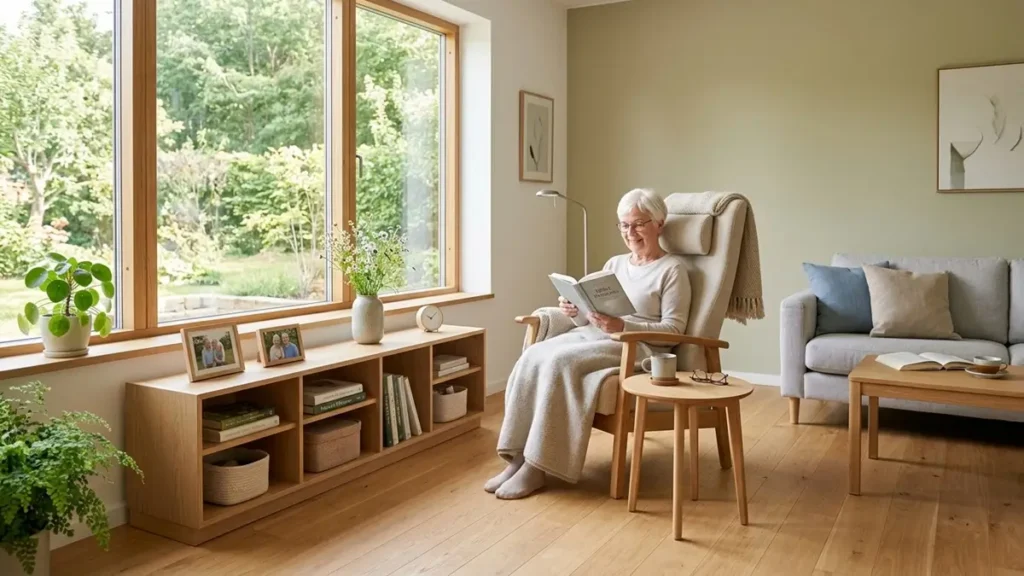
Caring for a father, mother, spouse, or a 100‑year‑old grandmother with Alzheimer’s is undoubtedly one of the most complex and emotionally intense journeys life can offer. It is a rollercoaster where love mingles with frustration, patience is tested daily, and the feeling of helplessness can sometimes feel overwhelming.
But take a deep breath. You are not alone. This guide was created to be your compass. We won’t talk about a cure (as none exists yet), but about quality of life, strategies that actually work, and above all, how to preserve the essence of your loved ones and your own sanity.
Let’s go together.
What Is Essential to Help a Person with Alzheimer’s?
Dealing with Alzheimer’s at a very advanced age—such as 100 years old—requires immense patience and love, as physical fragility adds to mental confusion.
To help elderly people with Alzheimer’s and their families, it is essential to focus on three pillars:
- Establish a predictable routine to reduce the elderly person’s anxiety.
- Adapt the home environment to ensure physical safety.
- Seek emotional and technical support for caregivers, preventing family burnout and ensuring quality of life for everyone involved.
“Caring for an elderly person with Alzheimer’s is undoubtedly one of the greatest challenges a family can face. Here at Saúde com Equilíbrio, we live this reality firsthand with our 100‑year‑old matriarch, who just turned 100 in January. We know that each day demands an extra dose of patience, love, and strategy.
According to the World Health Organization (WHO) , Alzheimer’s disease and other dementias are among the biggest global public health challenges, impacting not only the elderly but deeply their families and caregivers. Alzheimer’s is the most common form of dementia, accounting for 60% to 70% of cases.
Although Alzheimer’s brings enormous difficulties, understanding how to adapt routines and embrace emotions—both of the elderly person and the caregivers—is what allows us to maintain dignity and affection within the family environment.
In this guide, we have gathered practical and human‑centered guidance to help you and your family overcome the challenges of Alzheimer’s with more serenity and support.”
Many people think Alzheimer’s is “just memory loss.” But that’s like saying a hurricane is “just wind.” Experts describe it as a progressive neurodegenerative disease that goes far beyond memory. It affects behavior, decision‑making, communication, and even basic tasks like swallowing or walking.
The Science Behind Forgetfulness: Understanding the Brain
Imagine the brain as a vast forest with well‑marked trails. Alzheimer’s begins to block those trails with beta‑amyloid plaques and tau tangles. Over time, connections are lost and the forest (the brain) shrinks.
Understanding this is liberating, because it removes blame from the elderly person. They aren’t being stubborn; the “trails” that led to the memory simply no longer exist.
The 7 Stages of the Disease: A Roadmap for Families
Knowing which stage your loved one is in helps you plan care. In summary:
- Stages 1–3: No symptoms to minor memory lapses noticeable only to those close to them.
- Stages 4–5: Moderate decline. Difficulty with calculations, forgetting recent events, confusion about where they are. Help with daily tasks becomes necessary.
- Stages 6–7: Severe to very severe decline. Loss of speech, need for help with all activities, loss of bladder/bowel control, and eventually difficulty sitting and swallowing.
Understanding this map is not meant to frighten you, but to prepare you. Each phase requires a different type of care.
Pillar 1: Communication That Welcomes (and Does Not Confront)
Communication is the most common minefield. Let’s disarm it.
The Golden Rule: Step into Their World
If your father asks to go “visit mom” (who has passed away), never say, “Dad, she died 20 years ago.” That triggers instant and repeated traumatic grief.
Instead, step into his reality. Say: “Let’s go, Dad. She must be waiting for us. How about we have some coffee first, and then we’ll go?” Most of the time, he gets distracted and the topic fades. You have avoided a crisis of tears and anguish.
Phrases That Help vs. Phrases That Hurt: A Practical Guide
| Avoid (Confrontation) | Use (Welcoming) |
|---|---|
| “I’ve told you a thousand times!” | “I see you’re confused. Let’s do it together.” |
| “Don’t you remember? It happened yesterday.” | “I’m glad you remembered that. Tell me more.” |
| “Stop making things up!” | “That’s an interesting story. How does it make you feel?” |
| “You can’t do that.” | “How about we try it this way?” (Redirecting) |
Pillar 2: Daily Life Strategies (Routine with Dignity)
How to Create a Safe and Familiar Environment
The home can become a dangerous place. Small adaptations save lives:
- Labels: Put picture labels on cabinets (e.g., a shirt drawing on the wardrobe, a cup on the coffee cabinet).
- Lighting: Night lights in hallways and bathrooms prevent falls during nighttime disorientation.
- Safety: Install high locks on doors leading outside, remove loose rugs, and avoid mirrors in places that might startle (the person may not recognize themselves and think it’s a stranger).
Activities That Awaken the Essence: Music, Art, and Emotional Memories
Procedural memory (how to do things) and musical memory often last the longest. Simple activities like:
- Music: Playing a playlist with songs from their youth can bring calm and even moments of clarity.
- Laundry piles: Asking them to help “fold” clothes (even if it’s just crumpling) gives a sense of purpose.
- Photo albums: Flipping through albums and naming people (without correcting) is powerful therapy.
Meals and Hygiene: How to Handle Resistance
Bathing is one of the biggest challenges. Respect their modesty. Use blankets to warm them, speak calmly, and if they resist strongly, remember: it is not a war. One day without a bath will not hurt them, but a fight will.
Offer small portions of food, use adaptive utensils, and accept that they may eat with their hands. Nutrition is more important than etiquette.
Pillar 3: The Invisible Caregiver – Caring for the One Who Cares
Now, the most important part: you.
The Silent Signs of Burnout (Caregiver Syndrome)
If you are constantly irritable, have frequent headaches, insomnia, have lost interest in things you loved, and feel you have no patience left, you are not a bad person. You are exhausted. Chronic caregiver stress has a name and needs to be addressed.

5 Foolproof Strategies to Preserve Your Own Health
- Build a Support Network: Do not do this alone. Share tasks with siblings, hire a caregiver for a few hours, accept help from neighbors.
- Scheduled Breaks: Respite is not a luxury. One hour a day to walk, read, or simply do nothing is essential to recharge.
- Therapy: A psychologist can give you tools to deal with guilt, anger, and anticipatory grief.
- Physical Activity: It is the best natural antidepressant and fights the effects of cortisol on your body.
- Support Groups: Talking to those who live the same reality is a balm. No one understands caring for an Alzheimer’s patient better than another caregiver.
Navigating Legal and Financial Challenges
While the elderly person still has lucidity (in the early stages), it is essential to address:
- Guardianship: To make legal and medical decisions when they can no longer do so.
- Health Insurance: Check coverage for home care and hospitalization.
- Documentation: Get powers of attorney and wills in order. Ignoring this can turn an already difficult situation into bureaucratic chaos for the family.
5 Practical Strategies to Overcome Daily Difficulties
- Simplified Communication: Use short, direct sentences. Avoid constant arguments or corrections about memory lapses, always focusing on emotional acceptance.
- Strict Routines: Keep fixed times for meals, bathing, and sleep. Predictability reduces agitation and mental confusion.
- Environment Adaptation: Remove rugs, improve lighting, and use labels on doors (like “Bathroom”) to help with orientation and prevent falls.
- Mild Cognitive Stimulation: Encourage simple activities such as looking at old photo albums or listening to music the elderly person enjoyed in their youth to stimulate emotional memory.
- Family Task Sharing: Care should not fall on a single person. Establish a rotation so that everyone participates and the primary caregiver can rest.
How to Care for the Caregiver: The Role of the Family
Caring for an elderly person with Alzheimer’s is a marathon. For the family to overcome difficulties, it is necessary to:
- Accept limitations: Understand that aggression or forgetfulness are symptoms of the disease, not a lack of affection.
- Join Support Groups: Exchanging experiences with other families reduces the feeling of isolation.
- Seek Professional Help: Therapy for family members and constant medical follow‑up for the elderly person are crucial investments.
You may also want to read (in Portuguese):
- Alzheimer e Parkinson – Tratamentos e Avanços Científicos 🇧🇷
- Controle Natural da Pressão Alta: Alimentos e Chás que Protegem o Coração do Idoso 🇧🇷
- Exercícios Físicos para Saúde e Longevidade: Guia Completo para Todas as Idades 🇧🇷
Conclusion: How to Care for an Elderly Person with Alzheimer’s
Caring for a family member with Alzheimer’s is not about being a perfect hero. It is about being human. It is about accepting that there will be bad days, sleepless nights, and moments of pure helplessness.
But there will also be flashes of lucidity, spontaneous smiles, and the certainty that even when memory fails, the feeling of being safe and loved remains.
You do not have to do this alone. Use the tools we have listed here, seek support, and above all, be kind to yourself.
Now it’s your turn: What is the biggest challenge you face in the daily care of a family member with Alzheimer’s? Share in the comments below.
Let’s build together a support network where every experience helps another. Your story could be the comfort someone needs right now.
Frequently Asked Questions About How to Help Elderly People with Alzheimer’s
1. How to calm an agitated elderly person with Alzheimer’s?
Stay calm, use a low tone of voice, and try to redirect their attention to something pleasurable, like music or a snack.
2. When is the time to hire a professional caregiver?
When the care routine begins to compromise the physical or mental health of family members, or when the elderly person shows constant safety risks.
3. At what stage of Alzheimer’s should I consider hiring a professional caregiver?
There is no fixed rule, but ideally it should be done when care demands begin to compromise the physical and mental health of the primary caregiver, usually in stages 4 or 5, when constant supervision and help with tasks like hygiene and feeding are needed.
4. How can I convince my family member to take a bath without becoming aggressive?
Never force them. Try to identify the best time of day for them. Use blankets to warm the environment, offer a sponge bath as an alternative, and use “distraction therapy” by playing music they enjoy. Sometimes skipping a day is the best choice to preserve the relationship.
5. Is it true that Alzheimer’s has a strong genetic component?
Only a small percentage of cases (about 1%) is early‑onset familial Alzheimer’s, directly linked to genetics. The most common form (sporadic) has genetic risk factors but is strongly influenced by lifestyle, age, and cardiovascular health history.
6. What to do when the person with Alzheimer’s repeats the same question several times in a row?
Repetition is a common symptom. Instead of answering impatiently or giving the same literal response, validate the emotion behind the question. Respond calmly, use a non‑literal answer, or redirect attention to a pleasurable activity, such as a snack or music.
7. How to explain to a child what is happening to their grandparent who has Alzheimer’s?
Use simple, concrete language, comparing the brain to a “puzzle that is losing pieces.” Say that the grandparent still loves the child very much, but sometimes confuses words or faces. Encourage the child to interact through non‑verbal activities, such as listening to music together or looking at old photos.
“Science shows us the way; empathy makes us walk with dignity beside those who need it most.”
The construction of this guide also benefited from consolidated knowledge in international guidelines, such as publications from the Alzheimer’s Association (USA) and the World Health Organization (WHO) , as well as clinical experience shared by professionals from the Brazilian Society of Geriatrics and Gerontology (SBGG) .
📚 Scientific and Institutional References
Below are the main sources that supported the creation of this guide. All were selected for their academic relevance, institutional authority, and practical contribution to the topic.
🧠 Scientific Studies on Stress and Caregivers
1. Corrêa, M. S. (2015). Analysis of the effects of chronic stress and aging on cognition of family caregivers of patients with Alzheimer’s disease and its relationship with cortisol, DHEA, and BDNF levels. Doctoral dissertation, Pontifical Catholic University of Rio Grande do Sul (PUCRS).
- Contribution: Demonstrated that family caregivers show an elevation in the cortisol/DHEA ratio and reduced BDNF levels—hormones and neurotrophins directly linked to chronic stress and cognitive impairment. The research also revealed that elderly caregivers suffer more intense hormonal and cognitive changes.
- Link: http://tede2.pucrs.br/tede2/handle/tede/6436
2. Corrêa, M. S., Vedovelli, K., Giacobbo, B. L., et al. (2015). Psychophysiological correlates of cognitive deficits in family caregivers of patients with Alzheimer Disease. Neuroscience, 286, 371-382.
- Contribution: A study published in a high‑impact international journal that identified a direct relationship between chronic stress in caregivers and poorer performance in attention, working memory, and executive functions. The findings reinforce the importance of interventions that reduce hormonal stress load.
- Link: https://doi.org/10.1016/j.neuroscience.2014.11.052
3. Liu, Y., Almeida, D. M., Rovine, M. J., & Zarit, S. H. (2018). Modeling Cortisol Daily Rhythms of Family Caregivers of Individuals With Dementia: Daily Stressors and Adult Day Services Use. The Journals of Gerontology: Series B, 73(3), 457-467.
- Contribution: Research that demonstrated, through analysis of the daily cortisol rhythm, that the use of support services (such as adult day centers) produces measurable physiological benefits in caregivers, reducing the stress response upon awakening and improving the morning decline of the hormone.
- Link: https://doi.org/10.1093/geronb/gbw140
4. Mackenzie, J., & Sherwood, P. (2025). Q&A: Who Experiences Caregiver Stress, and How Can It Be Managed? University of Virginia School of Nursing.
- Contribution: An updated interview (September 2025) with a specialist from the University of Virginia explaining the concept of “caregiver stress” as a state of prolonged physiological alertness, compared to “living with a bear that never goes away.” It addresses impacts on immunity, cardiovascular health, and the importance of psychoeducational interventions.
- Link: https://nursing.virginia.edu/news/caregiver-stress-paula-sherwood/
5. Oken, B. S., et al. (2011). Stress‑related cognitive dysfunction in dementia caregivers. Journal of Geriatric Psychiatry and Neurology, 24(4), 191-198.
- Contribution: A study comparing caregivers of dementia patients with a control group, identifying that caregivers perform worse on attention and executive function tasks. Poor sleep was identified as a major mediator of this effect.
- Link: https://pmc.ncbi.nlm.nih.gov/articles/PMC3340013/
About the author: I am Marcos Fonseca, a Chemistry and Information Technology teacher for over 20 years — passionate about turning science into real‑world practice. Here, you will find fact‑based content, with no magic promises.
⚠️ Important: This content is for informational and educational purposes only. It does not replace medical, nutritional, or psychological evaluation. If in doubt, always consult a qualified professional. If this space serves you, feel free to explore — and 👉 learn more about my journey.

About me: I’m Marcos Fonseca, a Chemistry and Computer Science professor for over 20 years — and passionate about transforming science into real-world practice. Here, you’ll find fact-based content, without magical promises. If this space suits you, feel free to explore — and 👉 learn more about my journey