What is the best form of magnesium for people over 60?
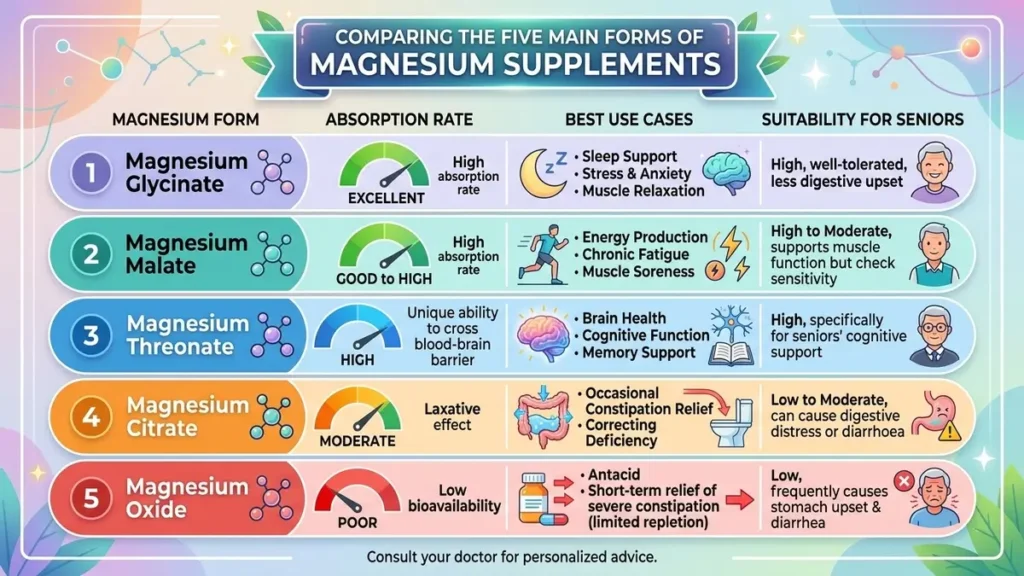
Magnesium glycinate is considered the best form of magnesium for seniors because it combines elemental magnesium with glycine, an amino acid that enhances absorption in the intestinal tract. Unlike magnesium oxide, which has low bioavailability (around 4%), glycinate is absorbed at rates above 80% and rarely causes digestive side effects.
For people over 60, who absorb nutrients less efficiently and often take medications that deplete magnesium, this form offers the highest practical benefit with the lowest risk of adverse effects.
After 60, your body starts working against you in subtle ways — and magnesium deficiency is one of the most overlooked reasons why.
Muscle cramps that wake you up at night. Poor sleep. A racing heart. Constipation that no one seems to solve. These are not just “signs of aging.” In many cases, they are signs of low magnesium — a mineral that over 50% of Americans over 60 are not getting enough of, according to data from the National Health and Nutrition Examination Survey.
This guide breaks down the science, explains which forms of magnesium actually work for older adults, and gives you a shortlist of the best products available on Amazon right now.
Why Magnesium Matters More After 60
Magnesium is involved in over 300 enzymatic reactions in the human body. It regulates blood pressure, blood sugar, muscle contraction, nerve function, and bone density — all areas that become more vulnerable with age.
Here is what changes after 60 that increases your need for magnesium:
- Reduced intestinal absorption: the gut becomes less efficient at extracting magnesium from food
- Increased urinary excretion: the kidneys filter out more magnesium as we age
- Medication interactions: common drugs like proton pump inhibitors (omeprazole), diuretics, and metformin actively deplete magnesium
- Lower dietary intake: appetite decreases with age, reducing overall nutrient consumption
The result: even seniors eating a “balanced diet” can still be chronically low in magnesium.
7 Signs You May Be Magnesium Deficient
If you experience three or more of these regularly, low magnesium may be a contributing factor:
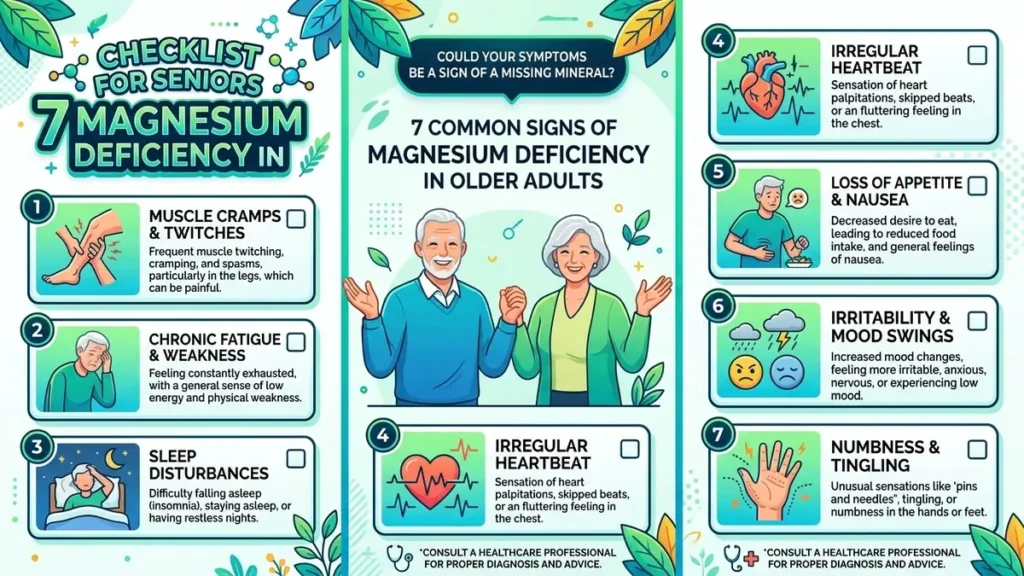
- Nighttime leg cramps or muscle twitches
- Difficulty falling or staying asleep
- Unexplained fatigue or low energy
- Constipation or irregular digestion
- Heart palpitations or irregular heartbeat
- Anxiety, irritability, or low mood
- Headaches or migraines
Important: these symptoms can have multiple causes. Always consult your doctor before starting any supplement, especially if you take prescription medications.
The 4 Best Forms of Magnesium for Seniors
Not all magnesium supplements are the same. The form determines how well your body absorbs it and how it affects your digestion.
| Form | Absorption | Best For | Notes |
|---|---|---|---|
| Glycinate | Very high | Sleep, anxiety, cramps | Gentlest on the stomach |
| Malate | High | Muscle pain, fatigue | Good for daytime use |
| Citrate | Moderate | Constipation | Can cause loose stools at high doses |
| Oxide | Very low (~4%) | Avoid for seniors | Cheap but ineffective |
Bottom line: for most seniors, magnesium glycinate is the starting point. If constipation is the main concern, magnesium citrate is a solid secondary option.
Top 5 Magnesium Supplements for Seniors on Amazon (2026)
Disclosure: This article contains affiliate links. If you purchase through these links, I may earn a small commission at no extra cost to you.
1. Doctor’s Best High Absorption Magnesium
Why seniors choose it: Doctor’s Best is one of the most reviewed magnesium glycinate supplements on Amazon, with over 40,000 ratings from verified buyers. It uses the TRAACS chelated form — a patented process that binds magnesium to amino acids for significantly higher absorption than standard forms. The formula is gluten-free, non-GMO, and free of artificial additives, making it a solid first choice for seniors who want a well-tested, widely trusted product.
- Dose: 200mg per tablet (2 tablets = 200mg elemental magnesium)
- Price range: $20 to $28 for 240 tablets
- Best for: sleep improvement, muscle cramps, general deficiency
2. BulkSupplements. com Magnesium Glycinate Capsules
Why seniors choose it: BulkSupplements is known for one thing: pure ingredients with no extras. No binders, no fillers, no artificial colors or flavors. This magnesium glycinate is lab-tested for purity and potency, making it a practical choice for seniors who want a straightforward supplement at a competitive price point. If you prefer to know exactly what you are taking and nothing more, this is a reliable option.
- Dose: 200mg per softgel
- Price range: $18 to $24 for 60 softgels
- Best for: seniors looking for a trusted, verified brand
3. Mood, Energy & Muscle Pack – Pure Magnesium Glycinate & Iron Supplement
Why seniors choose it: This combo pack addresses two common deficiencies in older adults at once: magnesium and iron. Magnesium glycinate supports sleep, muscle function, and stress response, while iron helps maintain energy levels and healthy red blood cell production. It is a convenient option for seniors who want to simplify their supplement routine without sacrificing quality on either nutrient.
- Dose: 120mg per capsule
- Price range: $32 to $40 for 180 capsules
- Best for: seniors with digestive sensitivities or multiple allergies
4. Nature Made Magnesium Glycinate 200 mg Per Serving, Magnesium Supplement
Why seniors choose it: Nature Made is one of the most recognized supplement brands in the United States, and this magnesium glycinate carries USP verification — a third-party quality seal confirming that the product contains what the label says, at the stated potency, with no harmful contaminants. Each softgel delivers 200mg of elemental magnesium glycinate and is easy to swallow, which matters for older adults managing multiple supplements daily.
- Dose: 200mg per serving
- Price range: $28 to $35 for 60 servings
- Best for: seniors who want clinical-quality supplementation
5. Life Extension Magnesium Capsules 500 mg
Why seniors choose it: Life Extension has been publishing peer-reviewed research on supplements for decades, and this magnesium formula reflects that commitment to science. At 500mg per capsule, it combines multiple forms of magnesium for broader coverage. It is best suited for seniors working with a physician to actively correct a confirmed deficiency, rather than as a first-time supplement. Life Extension’s transparency about sourcing and research sets it apart from most brands at this price range.
- Dose: 500mg per capsule (mixed forms)
- Price range: $12 to $18 for 100 capsules
- Best for: seniors under medical guidance aiming to correct deficiency faster
How Much Magnesium Should Seniors Take?
The Recommended Dietary Allowance (RDA) for magnesium in adults over 51 is:
- Men: 420mg per day
- Women: 320mg per day
These numbers include magnesium from food sources. Most seniors get around 200 to 250mg from diet alone, meaning a supplement of 100 to 200mg per day fills the gap comfortably.
Practical tips for taking magnesium:
- Take glycinate at night — it supports relaxation and sleep
- Take citrate in the morning if using it for digestion
- Start with a lower dose (100mg) and increase gradually to avoid loose stools
- Take with a small meal to reduce the chance of nausea
- Do not take within 2 hours of thyroid or antibiotic medications
The Bottom Line
Magnesium deficiency is one of the most common and most correctable nutrient gaps in adults over 60. The right supplement — taken consistently at the right dose — can meaningfully improve sleep, muscle function, energy, and cardiovascular health.
Start with magnesium glycinate. It is the most bioavailable, gentlest form, and has the strongest track record for older adults.
If you want a personalized guide to magnesium deficiency — including a symptom checklist and a comparison of all major forms — download the free PDF guide below.
👉Download: The Senior’s Guide to Magnesium — Free PDF
This article is for informational purposes only and does not constitute medical advice. Always consult a qualified healthcare provider before starting any supplement regimen.
Frequently Asked Questions: Best Magnesium Supplements for Seniors
1. Can seniors take magnesium every day?
Yes. Magnesium is a dietary mineral, not a drug. Daily supplementation within the recommended range is safe for most adults. However, seniors with kidney disease should consult a doctor before supplementing, as impaired kidneys may struggle to excrete excess magnesium.
2. Does magnesium help with sleep in older adults?
Research suggests magnesium plays a role in regulating melatonin and the activity of GABA receptors, which promote relaxation. Several studies in older adults have found that magnesium supplementation improved sleep quality, reduced time to fall asleep, and decreased early morning waking.
3. Is it safe to take magnesium with blood pressure medication?
Magnesium can have a mild blood pressure-lowering effect and may interact with certain calcium channel blockers. Inform your doctor or pharmacist if you plan to add a magnesium supplement to your routine.
4. What foods are naturally high in magnesium?
Dark leafy greens (spinach, Swiss chard), pumpkin seeds, black beans, almonds, avocado, and dark chocolate are among the richest food sources of magnesium.
5. Can magnesium help with osteoporosis?
Magnesium is involved in bone formation and influences calcium absorption. Low magnesium levels have been associated with lower bone mineral density. However, magnesium supplements alone are not a treatment for osteoporosis — they should be part of a broader strategy that includes calcium, vitamin D, and weight-bearing exercise.

About me: I’m Marcos Fonseca, a Chemistry and Computer Science professor for over 20 years — and passionate about transforming science into real-world practice. Here, you’ll find fact-based content, without magical promises. If this space suits you, feel free to explore — and 👉 learn more about my journey